The Neurophysiology of Breath-Driven Resilience

Understanding How Breath Shapes the Physiology of Resilience

How do we navigate a world that constantly pulls our nervous system into over-activation while offering few places to rest and recover? This is one of the central paradoxes of our time.
Many of us find ourselves chasing calm without understanding what true regulation requires. In this pursuit, we often overlook one of the most essential ingredients of regulation: the capacity to transition fluidly between states—from stress to ease, effort to digestion, activation to stillness.
True mental wellness is not about sustaining a constant state of calm. It’s about cultivating adaptability.
This means having the ability to meet what’s present, whether difficult or beautiful, and return to a grounded baseline in a reasonable amount of time. Here’s the twist: although we live in a culture that values top-down learning (teaching the mind how to master itself and the body), cultivating adaptability is not simply a psychological skill.
It’s physiological.
A powerful way to build this capacity is through our breath, which is one of the few systems in our body that operates both consciously and unconsciously.
Breath is the bridge between what we feel and how we respond.
It’s also one of the most direct ways we can support the nervous system, the core infrastructure that shapes our energy, mood, focus, and resilience.
The Nervous System Detects First
The autonomic nervous system (ANS) regulates the background functions of your body—your heart rate, breathing, digestion, energy, and immune function. It also governs how you respond to stress: whether you mobilize, freeze, collapse, or stay grounded and connected.
What many people don’t realize is that this system is constantly scanning the environment and your internal state without your conscious input. It’s scanning for two key signals: Am I safe? Am I in danger?
Stephen Porges, the creator of Polyvagal Theory, calls this process neuroception: the body’s subconscious surveillance system, designed to detect cues of safety or threat.

This means we often don’t think our way into stress. Our body can detect stress signals first.
How Emotion Comes Before Thought
Neuroscience teaches us that emotions are physiological. This process is shaped in part by the limbic system, the brain’s emotional processing hub that links memory, mood, and threat detection.
The limbic system gives raw sensation its emotional tone, creating a felt experience in the body before the mind steps in to interpret it.
Emotions are immediate, automatic responses—chemical and electrical signals moving through the brain and body in milliseconds. Research shows it takes just 90 seconds for the biochemical wave of a specific emotion to move through the entire system.
Only after this emotional cascade begins does your mind interpret what is happening and assign meaning through thought and feeling, layering a story onto the body’s experience of a stimulus. And that story is what lingers, not the emotion itself.
Understanding this sequence is quite empowering. It explains why we can’t always “think” our way out of stress, or at least not right away.
The Breath–Emotion Feedback Loop
Across ancient traditions and modern science, it’s understood that how we breathe doesn’t just mirror our emotions; it shapes them.
Under stress, we tend to breathe high in the chest, fast and shallow. This reduces carbon dioxide too quickly, which paradoxically decreases oxygen delivery to the brain and tissues. The result is more agitation, anxiety, mental fog, and a reactive nervous system.
In short, what begins as a response to a stimulus is then amplified as our breath becomes dysregulated, creating a feedback loop that reinforces the very state we’re trying to escape.
But this loop is trainable.
Slow, diaphragmatic breathing with extended exhales restores balance between oxygen and CO₂, stabilizes heart rate, and signals safety to the brain via the vagus nerve.
Each inhale gently activates the sympathetic (mobilizing) response.
Each exhale engages the parasympathetic (rest and digest) response.
Together, they form the body’s built-in rhythm for balance.
The Four Channels of Awareness
To regulate the nervous system skillfully, it helps to understand the primary sensory pathways through which we interpret experience and stimuli. These four “-ceptions” shape how we move through life, whether we feel anchored or reactive, safe or threatened:
Neuroception: Subconscious detection of safety or threat signals, operating below conscious awareness and directing which state the autonomic nervous system mobilizes into.
Interoception: How we sense what is happening inside the body (heart rate, breath, hunger, temperature, and emotional tone).
Exteroception: How we perceive the external environment (sight, sound, smell, light, external temperature, and other sensory cues).
Proprioception: Our awareness of the body’s position in space (posture, movement, balance, orientation).
When we breathe and move consciously, we increase the integration between these systems. With mindful breathing, we can begin to notice: What am I sensing? Where is it coming from? What’s the story I’m building around it?
With this awareness, we can start observing (and creating) space between signal and story, or stimulus and reaction.
Creating this gap is where the cultivation of mental and physical flexibility and resilience begins.
Why the Vagus Nerve Matters
The vagus nerve, meaning "wandering nerve" in Latin, is the body’s primary channel for parasympathetic signaling, or rather, the body’s signaling of safety into the brain.
It connects the brainstem with the heart, lungs, gut, and other organs, playing a key role in regulating inflammation, mood, digestion, and recovery.
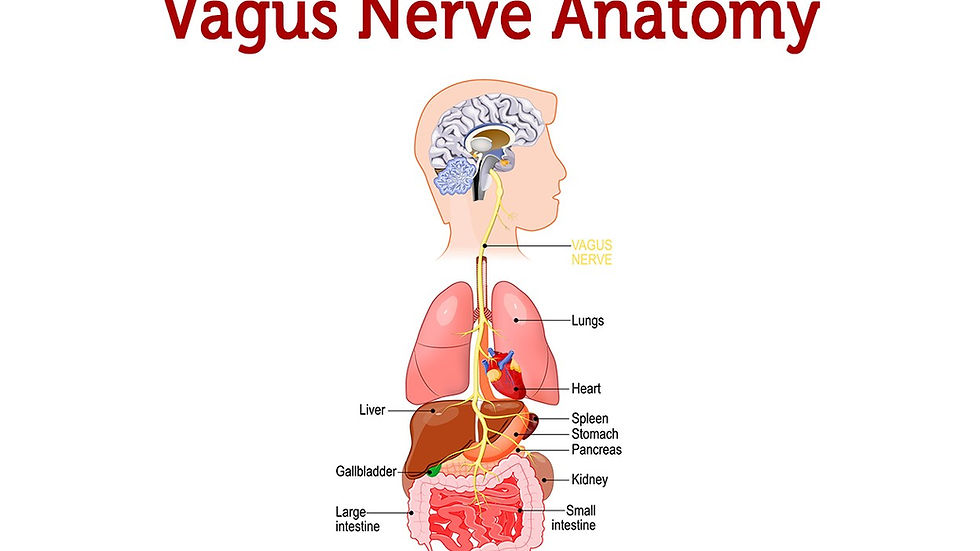
When vagal tone is strong, your system becomes more efficient at shifting between activation (a sympathetic state) and rest (a parasympathetic or ventral vagal state). You meet stress and mobilize for its demands, and then recover from it without getting stuck in that activated state.
This is the signature of a healthy nervous system. Not the state of constant calm, but the appropriate activation to a stimulus, and then recovering into a resting state.
Research shows that breathing at roughly six breaths per minute strengthens vagal tone, supports cardiovascular health, improves emotional regulation, and increases the release of oxytocin, a hormone associated with the experience of safety, trust, and social bonding.
What this means is that how you breathe directly influences your capacity for connection and resilience.
A Simple Reset Practice
Here is a simple breath practice I teach that is designed to stabilize the system and restore balance:
Inhale for 5 seconds through the nose, exhale for 5 seconds through the nose.
Let the breath be smooth and continuous. Focus on the feeling of the air moving through the nostrils. Do this for 10 cycles.
Shift to a 4-second inhale through the nose, 6-second exhale through the nose.
Let your attention rest in the exhale, the body’s natural doorway to regulation. As you exhale, focus on bringing the navel into the abdomen. Do this for 10 cycles.
Next, begin alternate nostril breathing (Nadi Shodhana):
Use the right thumb to cover the right nostril, inhale through the left for 4 seconds.
Then use the right pointer finger to cover the left nostril, exhale through the right for 6 seconds.
Inhale right, exhale left. Repeat for 6–8 rounds.
Then switch directions, inhaling through the right, exhaling through the left.
As the breath steadies, the heart rate follows. As you practice this breathing, you are supporting your vagus nerve in signaling safety. Another way to think about this is that your focused breathing is consciously supporting the brain in receiving a new story—not from the mind, but from the body.
As the vagus nerve signals safety and the parasympathetic state turns on, blood moves from being mobilized in the limbs for action back into the organs for rest and digest.
My Thanksgiving Breathing by the Sea
Breath cannot solve everything. But it can shift how we meet what life brings us. It gives us a way to intentionally regulate and return to ourselves with gentleness.
As you experience the inevitable complexity of life, remember: mental wellness is not about always feeling calm or thinking only positive thoughts. It’s about building a system—a body and mind—that can meet the moment and recover with flexibility.
Sometimes this practice looks like structured breathwork or movement. Other times, returning to this softening can be supported by choosing an environment that naturally invites more regulation. For me, one of my favorite places to practice breathing is by the ocean.
If these concepts resonate with you, this is the heart of what I teach at Lifeforce Labs to support leaders and teams in regulating, rewiring stress patterns, and thriving in high-performance environments.
I’d love to connect if you’re curious to learn more here.
The Importance of Breath in Daily Life
Breath is not just a tool for stress management; it’s a vital part of our daily existence. Every moment we breathe, we have the opportunity to influence our state of being.
When we consciously engage with our breath, we can cultivate a sense of presence. This presence allows us to navigate challenges with clarity and resilience.
Breathing Techniques for Everyday Use
Incorporating breath practices into our daily routine can be transformative. Here are a few techniques to consider:
Mindful Breathing: Take a few moments each day to focus solely on your breath. Notice the rise and fall of your chest. This simple act can ground you in the present moment.
Box Breathing: Inhale for four counts, hold for four counts, exhale for four counts, and hold for four counts again. Repeat this cycle several times to calm your mind and body.
Gratitude Breathing: With each inhale, think of something you are grateful for. With each exhale, release any tension or negativity. This practice can shift your mindset and enhance your emotional well-being.
Creating a Breath-Friendly Environment
Our environment plays a significant role in our ability to breathe freely and deeply. Here are some tips to create a breath-friendly space:
Declutter Your Space: A tidy environment can promote a sense of calm and clarity.
Incorporate Nature: Surround yourself with plants or spend time outdoors. Nature has a calming effect on our nervous system.
Limit Distractions: Create a space that minimizes noise and interruptions, allowing you to focus on your breath and inner experience.
The Journey of Breath and Resilience
As we journey through life, our breath can serve as a constant companion. It reminds us to pause, reflect, and reconnect with ourselves.
When faced with challenges, let your breath be your anchor. It can guide you back to a place of balance and clarity. Embrace the power of your breath, and watch how it transforms your experience of resilience.
The Connection Between Breath and Resilience
In conclusion, the relationship between breath and resilience is profound. By understanding and harnessing this connection, we can foster a sense of well-being that permeates every aspect of our lives.
Let us embark on this journey together, supporting one another in cultivating resilience through the simple yet powerful act of breathing.
Breath is a gift we can give ourselves daily. It’s a reminder that we have the power to influence our state of being. Let’s cherish this gift and use it to navigate the complexities of life with grace and strength.

Comments